

Top Coliving Companies in Bogotá

Bogotá is rapidly emerging as a sophisticated hub for digital nomads in South America. Unlike the eternal spring of Medellín, the capital offers a cosmopolitan "New York of the Andes" vibe - bustling, cultured, and gritty. For remote workers, the rental market here can be complex; traditional leases often require an "aval" (a local guarantor with property), which is impossible for foreigners to provide.
Looking to actually book a stay?
This is an editorial guide, Everything Coliving is a content + advisory platform for operators, not a booking engine. To actually find availability and pricing for Bogota:
- Browse our Top Coliving Spaces directory + Operators Directory
- Check the major booking aggregators: BookMyColiving.com, Coliving.com, Spotahome, HousingAnywhere, Outsite
If you're an operator and want your space listed in our directory, submit it here.
Quick facts (editorial averages)
- Typical stay length: 1-12 months (most operators want 1mo+ minimum)
- Per-day / short stay: Rare, most Bogota operators don't run nightly rates. Check Outsite or hostels for <30-day stays.
- Pet policy: Mixed, typically allowed with deposit + restrictions; ask each operator directly.
- Rent range: Varies by neighborhood, see the operator-level pricing below or our city benchmarks for the Bogota stabilised RevPAB band.
Editorial averages from our operator network. Individual Bogota operators set their own policies, always confirm directly before booking.
Coliving removes this barrier entirely. Operators in Bogotá - concentrated in the trendy districts of Chapinero, Chicó, and the artistic San Felipe - offer fully furnished living solutions with flexible terms. You get the security of 24/7 concierge buildings (very common in Bogotá) and an instant social network in a city that can sometimes be hard to navigate alone.
While rent in Bogotá is significantly lower than in Europe or the US, the "Coliving Premium" here provides essential value: reliable high-speed internet (critical in the mountains), English-speaking support, and safe, walkable locations. The list below covers the top operators you need to know.
For a quick overview of the best options, here is the full list at a glance:
Top Bogotá Coliving Companies (Quick Reference)
Plura: The gold standard for purpose-built coliving in the Art District (San Felipe).
Coliving Centro Internacional: High-rise apartment living in the heart of the downtown business district.
Plura
Plura is arguably the best purpose-built coliving facility in Bogotá. Located in the San Felipe Art District, it was designed from the ground up for remote workers. It features biometric access, high-speed fiber internet with redundancy, and apartments that are compact but incredibly functional. The vibe is creative and professional.
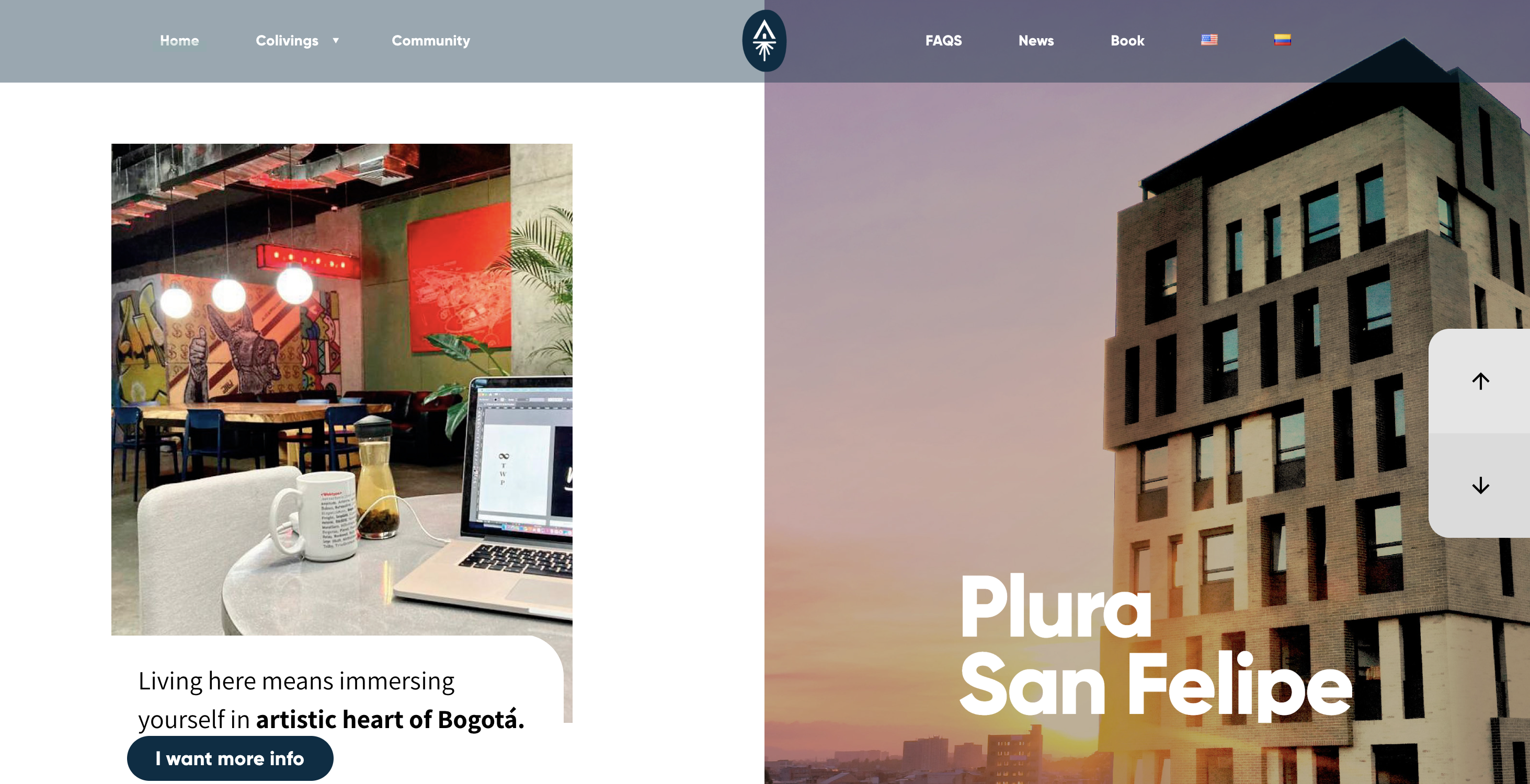
Location: San Felipe (The Art District). A gritty, up-and-coming neighborhood packed with galleries and studios, located strategically between the north and the center.
Website: https://plura.co/home
Pricing: $600-$900 USD/month. Excellent value considering the amenities (gym, coworking) are included in the rent.
Deposit: 1 Month. Fully refundable and managed professionally.
Rental Terms: 1 to 12 Months. They offer sliding scale pricing - the longer you stay, the cheaper the monthly rate becomes.
Amenities: Rooftop terrace with 360 views, professional gym, coworking lounge, communal kitchen, and frequent art/cultural events.
Coliving Centro Internacional
"Centro Internacional" refers to the high-rise financial heart of Bogotá. Coliving options here offer spectacular skyline views and proximity to the National Museum. Living here feels like being in a Manhattan skyscraper, with easy access to the historic La Candelaria district and the business hubs.
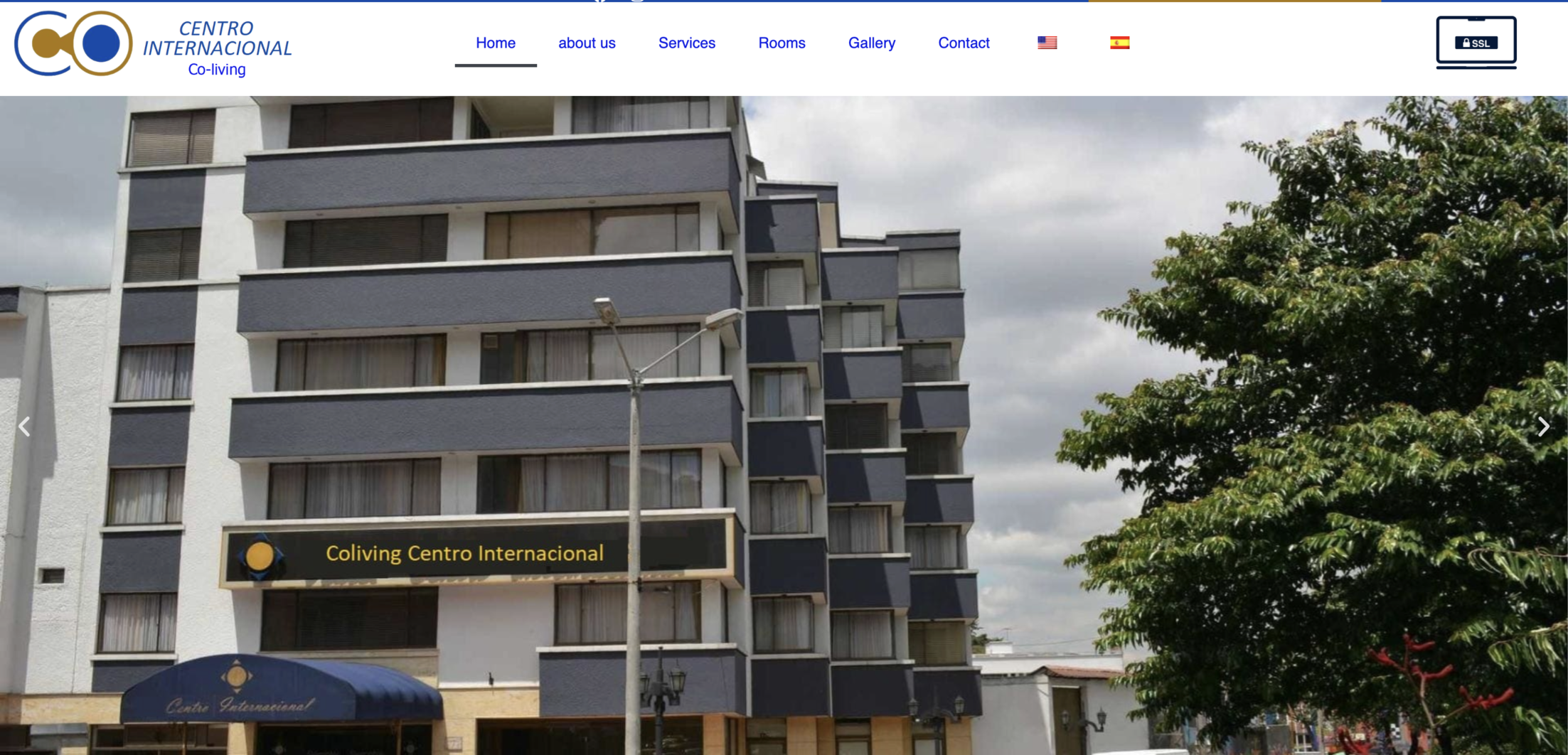
Website: https://colivingcentrointernacional.com/en
Pricing: Approx. $600-$1,000 USD/month. You pay a premium for the views and the modern, high-rise building amenities (elevators, 24/7 security).
Deposit: Standard 1 month or credit card guarantee. These are often run like serviced apartments, making the deposit process smoother for foreigners.
Rental Terms: Flexible (Weekly/Monthly). Ideal for consultants or business travelers who need to be close to downtown offices for a few months.
Amenities: 24/7 security guards (portería), gyms within the building, high-speed fiber optic internet, and modern, fully equipped kitchenettes.
To choose the right space in Bogotá, align with your vibe:
For the Professional: Plura (San Felipe) offer the best infrastructure for getting work done.
For Luxury: Centro Internacional apartments offer skyline views and modern comforts.
Insider Tip: Bogotá is huge and traffic is notoriously bad ("El Trancón"). Choose your coliving based on where you want to spend your time. If you love restaurants and nightlife, stay in Chapinero or Zona G. If you need quiet and safety, pick Chicó or Parque 93. Do not commute across the city if you can avoid it!
Want to get your coliving space listed? Contact us to be featured in this guide.
Bogotá coliving market: what the numbers actually say
Bogotá's coliving inventory has more than tripled since 2022. Our 2026 dataset tracks 1,400+ operator-led beds across the city, up from ~400 in 2022. Operating margin advantage versus Western markets is meaningful, local labor (community manager salaries ~$700-1,100/month vs €3,500-5,500 in Lisbon), utility costs roughly 35% of European equivalents, and capex per bed for conversion typically $4,500-9,000 (vs €15,000-30,000 in mid-market European cities).
Despite the cost advantage, three structural friction points keep Bogotá from being a "just do it" market: (1) the altitude (2,640m) creates an internet-reliability premium, operators serious about remote-worker demand invest in redundant fiber connections and backup 4G/5G, which European operators don't budget for; (2) safety perception, fair or not, is the single biggest objection in inbound marketing, and operators in Chapinero/Chicó/Centro Internacional spend 20-40% more on security infrastructure (24/7 portería, biometric access, CCTV); (3) the rental-market quirks (aval requirement) make the operator-friendly product more valuable but also mean traditional landlord competition is structurally weaker, which inflates Bogotá's stabilized RevPAB above what comparable Latin American cities show.
What rent looks like across neighborhoods
Coliving rents in Bogotá are tightly clustered around neighborhood positioning rather than property amenity. Approximate ranges (per bed, all-inclusive, monthly USD):
- Chapinero/Zona G: $550-750. Restaurant-dense, walkable, the obvious starter neighborhood for incoming nomads. Highest demand, fastest fill-up.
- Chicó/Parque 93: $700-950. Quieter, more residential, premium positioning. Demands a longer-stay tenant who values residential calm over nightlife.
- San Felipe (Art District): $600-900. Plura's home. Creative-class positioning; rapidly gentrifying. The neighborhood premium is real but still volatile.
- Centro Internacional: $600-1,000. Business-district positioning. Strong for consultants on 1-3 month contracts; weaker for resident-style stays.
- Chapinero Alto / Quinta Camacho: $500-700. The value play. Less amenity but better walkability than newer northern suburbs.
The ALOS (average length of stay) varies dramatically by neighborhood. Chapinero runs 2-4 months (nomad-heavy), Chicó runs 5-9 months (residential), Centro Internacional runs 2-3 months (business-traveler-heavy). Operators picking a neighborhood should map this against their economic model, short-ALOS neighborhoods need much higher RevPAB to offset turnover cost.
Free Newsletter
Join 37,000+ coliving professionals
Weekly insights on operations, marketing, and growth, delivered to your inbox.
Tenant demographics and what they're actually buying
Across the EC Bogotá dataset, coliving residents skew: 78% international (US 31%, Canada 11%, Europe 22%, Mexico/Brazil 9%, other 5%), 22% Colombian. The international segment is overwhelmingly remote workers (62% employed by foreign companies, 24% freelancers/founders, 14% students/short-term assignees). Average household income $80-130k USD, which means Bogotá coliving at $700-900/month is 8-13% of gross income, well below the 25-30% rent burden ratio. This is the structural reason occupancy holds firm even when general LATAM macroeconomics wobble.
What residents actually buy isn't furniture or wifi, those are table stakes. The premium signals operators report driving conversion: (1) verified bilingual community manager (English at C1 level minimum); (2) hosted onboarding (airport pickup, banking-setup intro, neighborhood orientation); (3) curated community of professionals (not students, not gap-year travelers); (4) all-inclusive utility + tax + cleaning structure that eliminates the foreign-paperwork hassle.
Operator economics: a typical Bogotá unit
A representative purpose-built Bogotá coliving (50 beds, mid-market positioning, Chapinero):
- Stabilized RevPAB: $670/month per bed
- Stabilized occupancy: 89-92%
- Gross monthly revenue: ~$35,000 (50 × 0.90 × $670 + ancillary)
- Property cost: $11,000/month (lease + tax), 31% of revenue
- Payroll (CM + ops): $4,500/month, 13%
- Utilities + supplies: $3,200/month, 9%
- Cleaning + maintenance: $2,800/month, 8%
- Marketing + sales: $2,000/month, 6%
- Insurance + software: $1,500/month, 4%
- NOI: ~$10,000/month / 29% margin
This is meaningfully better than equivalent Lisbon or Madrid economics (where comparable schemes run 22-26% NOI). The trade-off is operator concentration risk in one volatile macroeconomic environment, FX exposure on USD-denominated rent collected versus COP-denominated costs, and limited exit liquidity, there is no institutional Colombian coliving buyer pool yet, which means owners are typically holding to cash flow rather than selling for cap rate compression.
Beyond Plura and Centro Internacional
The two operators above are the highest-profile but Bogotá has a thicker operator field than the marketing surface suggests:
- Outsite Bogotá, Chapinero, premium nomad positioning. Strong English-language ops, integrated with global Outsite network.
- Casai (legacy), defunct but their former Roma/Condesa Mexico City model is now a template for Bogotá copycat operators.
- Local single-property operators, large fragmented field across Chapinero, Chicó, La Candelaria. Often run by expat founders or local property owners pivoting from short-term rental. Quality varies dramatically; verify the actual operating standard, not the marketing copy.
Practical considerations before booking
Visa & residency. Colombia offers a 90-day tourist visa for most nationalities, extendable to 180 days. For longer stays, the digital nomad visa (introduced 2023) allows 6 months to 2 years with a $684 USD/month income threshold. The DNI (digital ID) process for nomads is meaningfully simpler than Mexico's residency procedure but still requires in-person appointments.
Banking & payments. Cash is still significant in Bogotá but card penetration is improving fast. International cards work everywhere remote workers spend; Apple Pay and contactless are common. Major banks (Bancolombia, Davivienda) won't open accounts for short-stay foreigners, so most nomads operate on international cards (Wise, Revolut, Mercury). Coliving operators handle USD or COP rent collection; the smarter ones offer both.
Healthcare. Private healthcare in Bogotá is excellent (Fundación Santa Fe, Clínica del Country) and far cheaper than the US. Most coliving operators don't include health insurance; nomads typically use SafetyWing or comparable international travel-medical insurance.
Altitude adjustment. Real concern, often dismissed. Bogotá sits at 2,640m (8,660 ft). Plan for 7-10 days of reduced energy, lower exercise tolerance, possible mild altitude headaches. Hydrate aggressively, avoid alcohol the first week. Coliving operators in Bogotá worth their fees brief residents on this in onboarding.
Common operator mistakes in the Bogotá market
Three patterns repeat among Bogotá coliving operators who underperform:
- Underinvesting in English-language operations. The international remote-worker segment is 78% of demand; community managers without C1+ English can't actually serve them. Bilingual CM salaries run $1,200-1,800/month vs $700-1,000 for Spanish-only, but the demand uplift is 30-50% on bookings.
- Pricing in pesos for international residents. COP depreciation against USD has been steady; pricing in pesos and quoting USD equivalents lets operators capture the rising-real-rate without alienating local-paid tenants. Operators that lock USD prices for 6-12 month contracts win the longer-stay segment.
- Neighborhood mismatch. Chicó coliving with a nomad-style marketing aesthetic gets nomad guests who are bored by the quiet. Chapinero coliving with luxury positioning gets residents complaining about street noise. Pick a neighborhood, then build the brand for that neighborhood's actual demand profile.
Explore more coliving city guides
Planning a move or comparing cities? Browse the full coliving spaces directory, or explore more city guides:
Operate a coliving space?
Everything Coliving helps operators grow
From growth marketing and custom technology to hands-on advisory, we help coliving operators fill beds, cut operating costs, and scale. 13+ years in coliving, 60+ operators advised across 14+ countries.
Written by
Mayank Pokharna
Mayank Pokharna is the founder of Everything Coliving. 13+ years in coliving as an operator, PMS builder (JumboTiger, SimplyGuest), and advisor to 60+ operators advised across 14+ countries. Listed as a coliving expert on co-liv.org, featured in Forbes India, BBC Punjabi, Financial Express, and Economic Times, and published on the economics of shared living.
Explore Related Topics
Further Reading
Related Articles

Top Coliving Spaces in Hamburg
Coliving has quietly reshaped how newcomers settle into Hamburg. Instead of hunting for an unfurnished flat, negotiating utilities, and signing a long lease, residents get a…

Top Coliving Spaces in Chennai
Chennai's rental market rewards people who move fast and know what they want. For students, young professionals, and digital nomads, coliving offers a simpler path than the…

Top Coliving Spaces in Jaipur
Jaipur's rental market rewards people who move fast and know what they want. For students, young professionals, and digital nomads, coliving offers a simpler path than the…

Top Coliving Spaces in Athens
Finding a place to live in Athens as a newcomer, student, or remote worker can be daunting, upfront deposits, year-long leases, and furnishing an empty flat all add friction.…

Top Coliving Spaces in Tallinn
Coliving has quietly reshaped how newcomers settle into Tallinn. Instead of hunting for an unfurnished flat, negotiating utilities, and signing a long lease, residents get a…