

Top Coliving Companies in Bangkok

Bangkok is the undisputed entry point for digital nomads in Southeast Asia. It is a city of chaotic magic - street food vendors Michelin-starred for $5, mega-malls with indoor waterfalls, and a nightlife scene that never sleeps. For remote workers, the "Big Mango" offers incredible infrastructure: 5G is everywhere, cafes are work-friendly, and the cost of living is significantly lower than Singapore or Tokyo.
Looking to actually book a stay?
This is an editorial guide, Everything Coliving is a content + advisory platform for operators, not a booking engine. To actually find availability and pricing for Bangkok:
- Browse our Top Coliving Spaces directory + Operators Directory
- Check the major booking aggregators: BookMyColiving.com, Coliving.com, Spotahome, HousingAnywhere, Outsite
If you're an operator and want your space listed in our directory, submit it here.
Quick facts (editorial averages)
- Typical stay length: 1-12 months (most operators want 1mo+ minimum)
- Per-day / short stay: Rare, most Bangkok operators don't run nightly rates. Check Outsite or hostels for <30-day stays.
- Pet policy: Mixed, typically allowed with deposit + restrictions; ask each operator directly.
- Rent range: Varies by neighborhood, see the operator-level pricing below or our city benchmarks for the Bangkok stabilised RevPAB band.
Editorial averages from our operator network. Individual Bangkok operators set their own policies, always confirm directly before booking.
However, the rental market can be a maze. Most condos require 12-month leases and hefty deposits (2 months rent + 1 month advance). Coliving operators are the "soft landing" solution. They offer flexible monthly contracts, English-speaking staff, and instant community in a city of 10 million people where it can ironically be hard to make deep connections.
While you can find cheap condos on Facebook, the "Coliving Premium" here buys you convenience - bills included (electricity is pricey in Thailand), linen service, and access to coworking spaces just an elevator ride away. The list below covers the top operators you need to know.
For a quick overview of the best options, here is the full list at a glance:
Top Bangkok Coliving Companies (Quick Reference)
LITA Coliving: A modern, design-forward hostel and coliving space near the Fortune Town tech hub.
Lyf Bangkok: The millennial-focused brand by Ascott, featuring massive social kitchens and a prime Nana location.
The Quarter Poshtel: A hybrid hostel-coworking space in Ratchathewi, perfect for budget-conscious nomads.
LITA Coliving
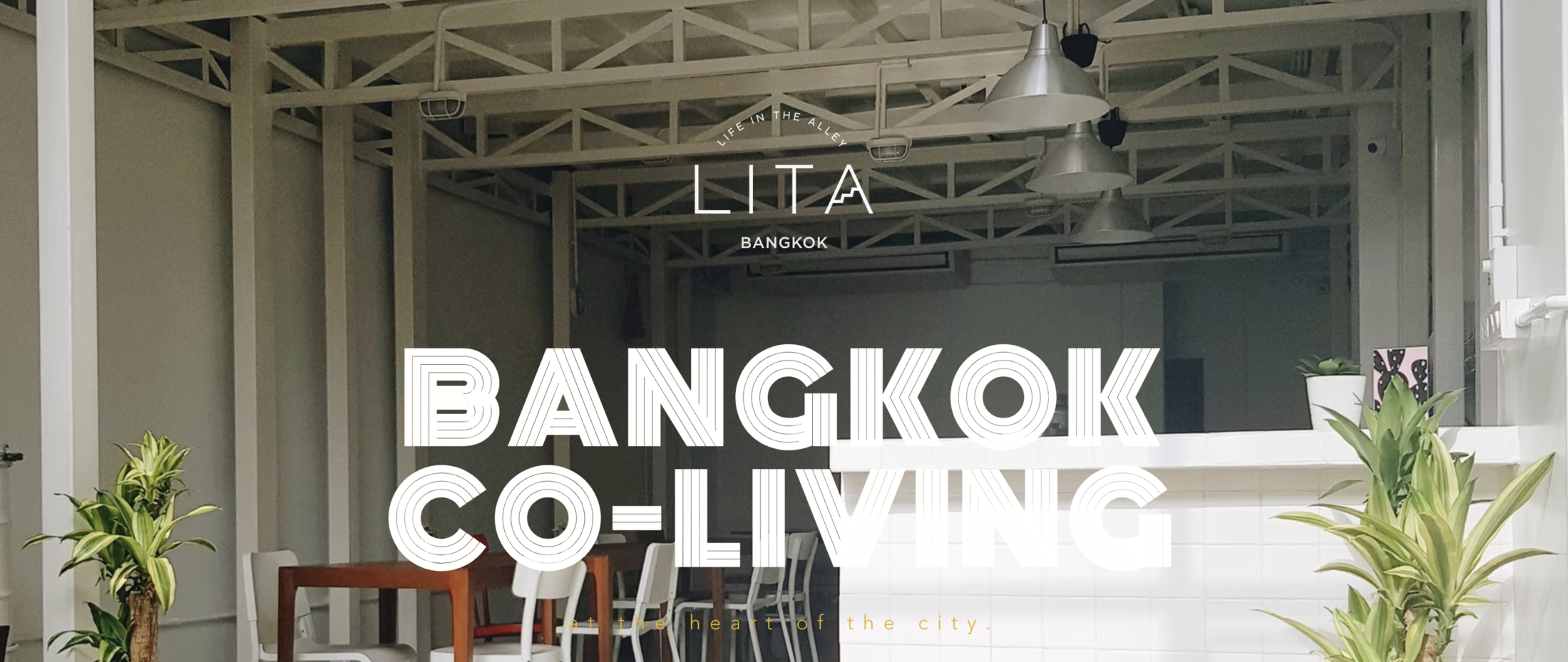
LITA (Living In The Art) Coliving blends the social energy of a hostel with the design of a boutique hotel. Located near the Rama 9 business district, it is a favorite for younger nomads and tech workers who need to be close to the "Fortune Town" IT mall. The vibe is industrial-chic, with polished concrete and plenty of common areas designed for interaction.
Website: https://litabangkok.com
Pricing:
Rates are highly affordable, typically ranging from $600 to $900 USD per month .
Private rooms offer great value for privacy, while luxury dorms provide a cheaper entry point without sacrificing comfort.
Deposit:
A minimal security deposit is required, usually just a key deposit or small hold.
This is much friendlier for travelers than the standard 2-month rental deposit required by most Bangkok condos.
Rental Terms: Terms are flexible, ranging from daily to monthly stays. This flexibility makes it an excellent option for nomads who want to test the neighborhood before committing to a longer lease.
Amenities: Features include a shared pantry for light cooking, a comfortable co-living lounge for socializing, high-speed Wi-Fi throughout, and proximity to the famous Jodd Fairs night market for evening food runs.
Lyf Bangkok
Lyf (pronounced "Life") is the purpose-built coliving brand by The Ascott Limited. Located in Sukhumvit Soi 8, "Lyf Sukhumvit 8" is a massive ecosystem. It features a "Bond" kitchen (huge shared cooking area), a laundromat that doubles as a social space, and "Connect" coworking zones. It is slick, professional, and managed with hotel-grade efficiency.
Website: https://www.discoverasr.com/en/lyf
Pricing:
Premium pricing generally starts from $1,200 to $1,800+ USD per month.
While higher than average, this rate is all-inclusive, covering housekeeping, utilities, and access to all social facilities.
Deposit: A credit card guarantee is standard for short stays. For longer monthly contracts, a one-month deposit may be required, but the process is transparent and professional.
Rental Terms:
Extremely flexible terms, accommodating stays from one night to one year.
Long-stay rates are significantly discounted compared to the daily hotel rate, making it viable for digital nomads.
Amenities: Boasts a rooftop terrace, a massive social kitchen ("Bond"), gamified common areas, 24/7 security, and ultra-fast Wi-Fi designed to support hundreds of simultaneous devices.
The Quarter Poshtel
The Quarter creates a bridge between a "Poshtel" (Posh Hostel) and a coworking space. It is designed for the nomad who needs a serious place to work but wants the social life of a backpacker. The "Quarter" refers to their coworking brand, so you know the internet and chairs will be up to standard.
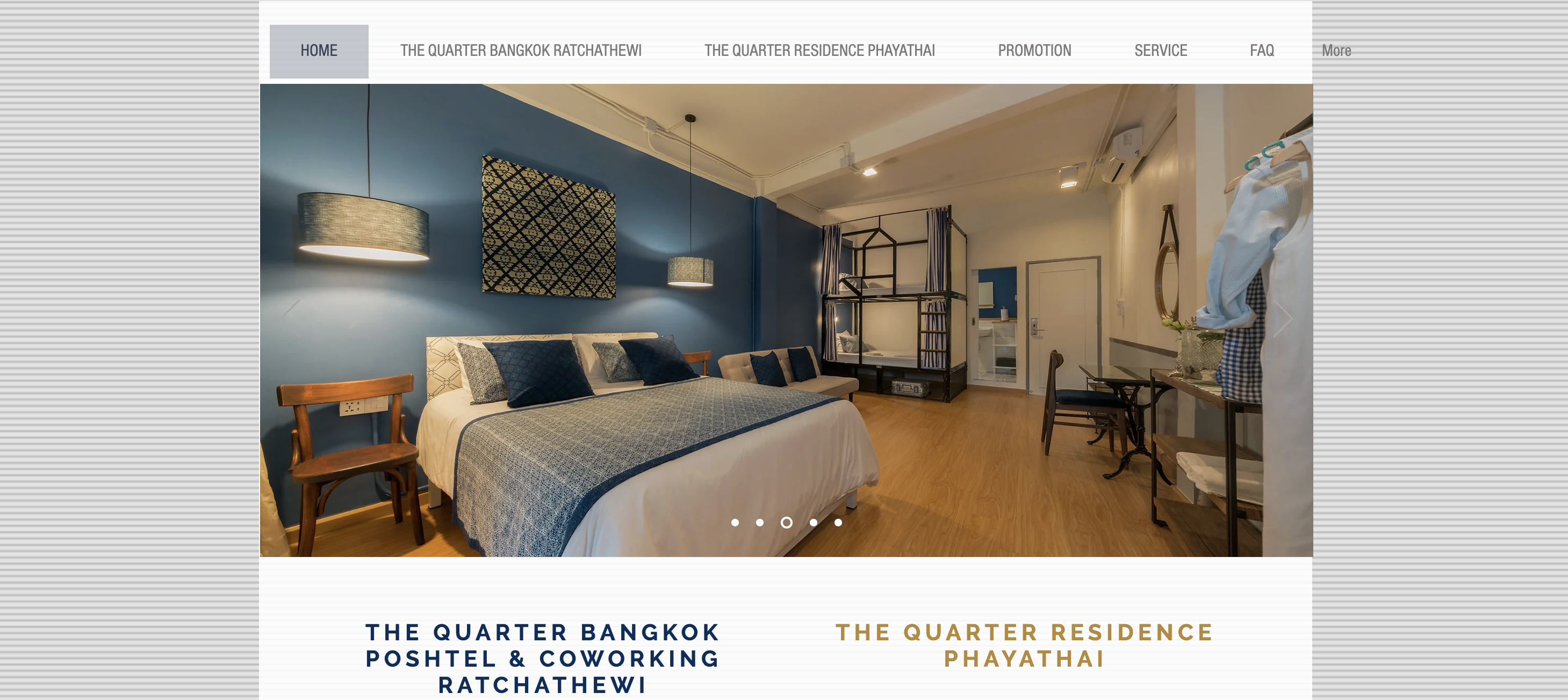
Location: Situated in Ratchathewi, a fantastic, more local-feeling district. It is walking distance to the Ratchathewi BTS and a short hop to the massive Siam shopping district (Paragon/MBK).
Pricing:
Very budget-friendly ($400-$700 USD/month) .
It offers one of the best value propositions in the city if you are comfortable with smaller private rooms or high-end dorms.
Deposit: Minimal deposit requirements. Standard booking fees apply via online platforms, making it an accessible option for travelers watching their cash flow.
Rental Terms:
Flexible daily and weekly rates allow for total freedom.
It is a popular choice for nomads who have just arrived and need a base while they hunt for a long-term apartment.
Amenities: Features a rooftop cafe/bar with city views, a dedicated coworking floor with ergonomic seating, meeting rooms for private calls, and comfortable chill-out zones.
To choose the right space in Bangkok, align with your vibe:
For the Socialite: Lyf Bangkok offers the biggest community and most active event calendar.
For the Budget: The Quarter Poshtel gives you a professional work environment at hostel prices.
For the Location: LITA Coliving places you right next to the MRT and the best tech malls in the city.
Insider Tip: Bangkok traffic is legendary for the wrong reasons. Live near the BTS (Skytrain) or MRT (Subway). Do not rely on taxis or Grab during rush hour (5 PM - 8 PM). A coliving space like Lyf (Nana BTS) or LITA (Rama 9 MRT) will save you hours of frustration every week.
Want to get your coliving space listed? Contact us to be featured in this guide.
Bangkok operator economics and the THB reality
Bangkok's coliving operators in 2026 have settled into a recognisable economic pattern. The table below summarises 2025 trailing twelve months from EC operator dataset across 18 Bangkok coliving assets.
| Metric | Premium (CBD/Sukhumvit prime) | Mid-market (Thonglor/Ekkamai/Sathorn) | Nomad-focus (Ari/Onnut/Asoke) |
|---|---|---|---|
| ADR per bed/month | THB 22,000-32,000 | THB 16,000-24,000 | THB 12,000-18,000 |
| Stabilized occupancy | 86-92% | 82-89% | 78-87% |
| Gross margin | 30-36% | 32-38% | 30-37% |
| Average length of stay | 5.8 months | 4.4 months | 2.9 months |
| USD-equivalent ADR | $610-$890 | $440-$670 | $330-$500 |
Bangkok neighborhood guide for operators
- Sukhumvit (Asoke, Phrom Phong, Thonglor, Ekkamai). The center of gravity for expat and nomad coliving. BTS access, restaurant density, international school proximity. ADR premium of 20-35% over peripheral neighborhoods.
- Sathorn / Silom. Corporate-tenant strength, embassy proximity, walking distance to financial district. Higher occupancy stability but lower nomad pricing flexibility.
- Ari / Ratchadamri / Phaya Thai. Emerging coliving submarkets with materially better yield-on-cost. Younger Thai professional tenant mix, growing nomad recognition.
- Onnut / Bang Na / Phra Khanong. Lower ADR ceiling but materially lower fit-out and acquisition cost. The yield-on-cost outperformers in EC operator dataset.
- Riverside (Charoenkrung, Sathorn Pier area). Creative and longer-stay cohorts. Limited supply, distinctive heritage stock, premium positioning possible.
Free Newsletter
Join 37,000+ coliving professionals
Weekly insights on operations, marketing, and growth, delivered to your inbox.
The DTV visa effect
Thailand's Destination Thailand Visa (DTV), launched in mid-2024, has materially expanded the legal pathway for 6-12 month nomad stays. EC operator interviews across late 2025 surfaced three structural shifts:
- Longer average length of stay. Nomad-focused operators report 30-45% longer stays for DTV holders versus tourist-visa nomads. This compresses turnover OpEx materially.
- Higher willingness to pay. DTV holders signal longer-term commitment and accept 10-20% higher ADR for ensuite and longer-lease product.
- Family and partner demand emerging. DTV-eligible dependents have created a small but growing family-coliving niche, particularly in the Ari and Phra Khanong submarkets where international school access matters.
Common operator mistakes in Bangkok
- Mixing hotel licensing with longer-stay coliving. Thai hotel licensing intersects with shared-housing in ways that catch foreign operators. The cleanest path for operators with sub-30-day stay components is full hotel licensing; for 30+ day stays, residential leasing structures are appropriate.
- Foreign ownership structure mistakes. Thailand restricts foreign ownership of land. Operators routinely use Thai limited companies with appropriate shareholder structures, but DIY structures without local counsel have created multiple unwinds in EC operator dataset.
- Underestimating monsoon flood exposure. Several Bangkok submarkets (Bang Kapi, parts of Sukhumvit Soi 71+) have material flood exposure. Insurance and CapEx underwriting must reflect this.
- BTS proximity miscalibration. A 700m walk to the BTS in Bangkok heat is functionally not a 700m walk. Properties within 350m of a BTS station outperform on both occupancy and ADR.
The Bangkok operator landscape
Bangkok hosts a more fragmented operator landscape than Singapore or Hong Kong, with EC operator dataset identifying 30+ meaningful coliving operators across the metro area. The landscape segments into:
- Singapore and Hong Kong platforms extending into Bangkok. Hmlet, Cove, and several other regional operators with Bangkok as one node in a multi-city portfolio.
- Bangkok-native boutique operators. 1-3 property founders building around design, community, or nomad positioning.
- Serviced-apartment operators pivoting toward coliving. Several established Thai serviced-apartment brands have launched coliving-style products targeting younger and longer-stay segments.
- Hotel-to-coliving conversions. Bangkok's oversupply of 3-star and 4-star hotels in non-tourist submarkets has created a steady pipeline of adaptive-reuse opportunities at attractive yields.
The 18-month outlook for Bangkok
- Continued DTV-driven demand growth. The DTV visa cohort is still building; EC operator interviews suggest 2026-27 will see the full demand impact of the policy.
- MRT and BTS extension impact. The Yellow Line, Pink Line, and Orange Line extensions are reshaping submarket accessibility. Operators acquiring along extension corridors should benefit from compression as connectivity improves.
- Regulatory clarification window. Thai tourism and immigration authorities have signalled intent to formalise coliving guidance. The next 18 months will determine whether the regulatory framework strengthens or weakens the longer-stay segment.
- Regional capital flow. Singapore and Hong Kong family offices have materially increased Thai property deployment since 2023. This capital is increasingly looking at coliving as a sector.
Bangkok new-operator playbook: what to actually do
- Thai legal structure is non-negotiable. Operate through a Thai limited company with appropriate shareholder structure. DIY structures without local counsel have created multiple unwinds in EC operator dataset.
- BTS proximity is the primary site-selection criterion. Within 350m of a BTS or MRT station. Operators choosing properties on the basis of price discount alone, with longer transit walks, consistently underperform on occupancy.
- Stay structure decides licensing pathway. 30+ day stays operate under residential leasing. Sub-30-day stays require hotel licensing. Mixing the two without clean structural separation creates real regulatory risk.
- Build local property management relationships. Thai property management companies (juristic person managers) hold real operational power. Develop strong relationships early.
- Underwrite monsoon and flood exposure. Several Bangkok submarkets carry material flood risk. Insurance and CapEx underwriting must reflect this.
Bangkok exit pathways in 2026
- Sale to regional operator platform. Singapore and Hong Kong-headquartered platforms (Hmlet, Cove, Ascott-affiliated) actively acquire Bangkok operators. Typical transaction: 50-200 beds, documented operating history.
- Sale to established Thai serviced-apartment operator. Several Thai serviced-apartment brands are acquiring coliving operators to expand product portfolio.
- Asset-level refinancing. Stabilized assets can be refinanced through Thai commercial banks at attractive rates. Foreign-currency debt requires more bespoke structuring.
Practical operational notes for Bangkok
- Community programming. Thai tenant cohorts respond differently to community programming than Western nomad cohorts. The most successful Bangkok operators run separate programming tracks for Thai and foreign tenants while maintaining shared common areas.
- Heat and AC management. Air conditioning is the largest OpEx variable in Bangkok. Operators with smart HVAC management report 18-28% OpEx savings vs static management.
- Visa documentation support. Operators providing visa documentation support (employment letters, lease registration) command ADR premium and reduce turnover. The administrative cost is modest; the LTV impact is material.
- Channel mix discipline. Bangkok nomad demand is heavily channel-driven (Booking, Airbnb mid-term, Nomadlist, direct). Operators relying on a single channel absorb material risk during platform disruption.
Explore more coliving city guides
Planning a move or comparing cities? Browse the full coliving spaces directory, or explore more city guides:
Operate a coliving space?
Everything Coliving helps operators grow
From growth marketing and custom technology to hands-on advisory, we help coliving operators fill beds, cut operating costs, and scale. 13+ years in coliving, 60+ operators advised across 14+ countries.
Written by
Mayank Pokharna
Mayank Pokharna is the founder of Everything Coliving. 13+ years in coliving as an operator, PMS builder (JumboTiger, SimplyGuest), and advisor to 60+ operators advised across 14+ countries. Listed as a coliving expert on co-liv.org, featured in Forbes India, BBC Punjabi, Financial Express, and Economic Times, and published on the economics of shared living.
Explore Related Topics
Further Reading
Related Articles

Top Coliving Spaces in Athens
Finding a place to live in Athens as a newcomer, student, or remote worker can be daunting, upfront deposits, year-long leases, and furnishing an empty flat all add friction.…

Top Coliving Spaces in Chiang Mai
Chiang Mai's rental market rewards people who move fast and know what they want. For students, young professionals, and digital nomads, coliving offers a simpler path than the…

Top Coliving Spaces in Manila
Manila's rental market rewards people who move fast and know what they want. For students, young professionals, and digital nomads, coliving offers a simpler path than the…

Top Coliving Spaces in Helsinki
Finding a place to live in Helsinki as a newcomer, student, or remote worker can be daunting, upfront deposits, year-long leases, and furnishing an empty flat all add friction.…

Top Coliving Spaces in Oslo
Oslo's rental market rewards people who move fast and know what they want. For students, young professionals, and digital nomads, coliving offers a simpler path than the…