

Sustainable Coliving: How to Build an Eco-Friendly Community

The Sustainability Advantage in Coliving
Coliving is inherently more sustainable than solo living. Shared spaces mean shared resources: less energy per person, less water per person, less waste per person, and a smaller physical footprint. But intentional sustainability practices can amplify this advantage significantly.
More importantly, sustainability is becoming a key differentiator in the market. 68% of coliving residents say environmental practices influence their housing choice. Properties with strong sustainability programs report 10-15% higher occupancy and 12% longer average stays.
The Coliving Sustainability Framework
1. Energy Efficiency
Quick Wins (Under $1,000):
- LED lighting throughout (reduces lighting energy by 75%)
- Smart thermostats with scheduling and occupancy detection
- Power strips with timers for common areas (prevent phantom loads)
- Low-flow showerheads and faucet aerators
- Draft sealing on windows and doors
- Motion-sensor lights in bathrooms, hallways, and storage areas
Medium Investments ($1,000-$10,000):
- Smart HVAC zoning (heat and cool only occupied spaces)
- Energy-efficient appliances (look for EU A+++ or Energy Star ratings)
- Window upgrades (double or triple glazing)
- Insulation improvements (attic, walls, floors)
- Heat pump water heaters (3-4x more efficient than traditional)
Major Investments ($10,000+):
- Solar panels (typical payback period: 5-8 years, depending on location and incentives)
- Battery storage for solar (maximize self-consumption)
- Ground-source heat pumps (highest efficiency heating and cooling)
- Building management systems (BMS) for comprehensive energy monitoring
Expected Impact: A comprehensive energy efficiency program can reduce energy costs by 30-50%, saving $200-$500 per bed annually.
2. Water Conservation
Coliving's shared bathrooms and kitchens create both challenges and opportunities for water conservation:
- Low-flow fixtures: 1.5 GPM showerheads, 0.5 GPM faucet aerators, dual-flush toilets
- Dishwashers: Always more water-efficient than hand washing (use them!)
- Greywater recycling: Reuse shower and sink water for garden irrigation (where regulations allow)
- Rainwater harvesting: Collect and use for gardens, cleaning, and toilet flushing
- Leak detection sensors: Smart water sensors alert to leaks immediately (preventing both water waste and water damage)
Expected Impact: 20-35% reduction in water usage and costs.
3. Waste Reduction
The Zero-Waste Kitchen:
- Comprehensive recycling and composting stations with clear signage
- Community composting program (balcony composters or partner with local composting services)
- Buy in bulk to reduce packaging (shared pantry staples like rice, pasta, oils)
- Ban single-use plastics in common areas
- Provide reusable water bottles, shopping bags, and food containers
- Partner with food rescue organizations for surplus food
In Rooms and Common Areas:
- Refillable soap and shampoo dispensers (eliminate individual plastic bottles)
- Digital communications instead of printed notices
- Furniture repair and upcycling before replacement
- E-waste collection and responsible recycling
- Donation program for items left behind by departing residents
Expected Impact: 50-70% reduction in waste sent to landfill.
4. Sustainable Sourcing
Furnishings:
- Choose durable, repairable furniture over disposable items
- Source from sustainable manufacturers (FSC-certified wood, recycled materials)
- Buy second-hand or refurbished when quality allows
- Choose natural materials: solid wood, cotton, wool, linen over synthetics
- Support local craftspeople and manufacturers
Supplies:
- Eco-friendly cleaning products (plant-based, biodegradable)
- Recycled paper products
- Fair-trade coffee and tea for communal supplies
- Local and seasonal food for community meals
- Refill partnerships with local zero-waste shops
5. Transportation
Coliving's urban locations and shared living model reduce transportation impact:
- Secure bike storage and maintenance tools
- Partnerships with bike-sharing and e-scooter services
- Car-sharing membership for the community (one shared car replaces 4-8 individual cars)
- EV charging stations (future-proofing for electric vehicle adoption)
- Information about public transit options prominently displayed
- Walking maps of the neighborhood highlighting nearby amenities
Engaging Residents in Sustainability
Sustainability only works when residents participate. Here is how to build engagement:
Make It Easy:
- Clear, visual recycling and composting guides (icons, not text)
- Sustainability built into the physical environment (compost bin next to trash, bike rack at the front door)
- Default settings that are sustainable (lights off timers, eco-mode on appliances)
Make It Social:
- Monthly sustainability challenges with community tracking (energy reduction, waste diversion)
- Community garden (even a small balcony herb garden builds connection and sustainability)
- Cooking events using local, seasonal ingredients
- Clothing swaps and repair workshops
- Group volunteering with environmental organizations
Make It Visible:
- Display energy and water usage dashboards in common areas
- Share monthly sustainability metrics with the community
- Celebrate milestones (1 ton of waste diverted from landfill!)
- Document and share your sustainability story on social media
The Business Case
Sustainability is not just good ethics - it is good business:
| Initiative | Annual Savings (30-bed property) |
|---|---|
| LED lighting | $500-$800 |
| Smart HVAC | $1,200-$2,000 |
| Low-flow water fixtures | $400-$600 |
| Waste reduction | $300-$500 |
| Solar panels (after payback) | $2,000-$4,000 |
| Total annual savings | $4,400-$7,900 |
Beyond direct savings:
- 10-15% rent premium for eco-certified properties
- Higher occupancy due to attracting environmentally conscious residents
- Longer stays (eco-conscious residents tend to be more community-oriented)
- Marketing differentiation in a crowded market
- Future-proofing against rising energy costs and environmental regulations
Certifications and Standards
Consider pursuing environmental certifications:
- LEED or BREEAM: Building-level environmental certification (most recognized globally)
- B Corp: Business-level sustainability certification (growing recognition)
- Green Key: Hospitality-specific eco-certification (well-known in the hospitality sector)
- Local certifications: Many cities have their own green building or sustainable business programs
Certifications provide third-party validation and can justify premium pricing.
Getting Started: The 90-Day Sustainability Plan
Days 1-30: Assessment and Quick Wins
- Audit current energy, water, and waste usage
- Install LED lighting, low-flow fixtures, and smart power strips
- Set up comprehensive recycling and composting
- Switch to eco-friendly cleaning products
Days 31-60: Community Engagement
- Launch a sustainability committee with interested residents
- Start a community garden or herb wall
- Organize the first sustainability challenge
- Begin tracking and sharing metrics
Days 61-90: Strategic Investments
- Get quotes for solar panels, HVAC upgrades, and insulation
- Develop a 2-year sustainability investment roadmap
- Explore certification options
- Document your sustainability story for marketing
Sustainability in coliving is not about perfection - it is about progress. Start where you are, use what you have, and involve your community in the journey. Every step forward makes your space better for residents, better for the planet, and better for your bottom line.
Free Newsletter
Join 37,000+ coliving professionals
Weekly insights on operations, marketing, and growth, delivered to your inbox.
Sustainability ROI math by retrofit type
From the EC operator dataset and energy retrofit case studies, sustainability investments in coliving pay back at very different rates depending on the type of retrofit and the local energy mix. A reference table of typical ranges:
| Retrofit | Typical capex (100-bed) | Annual savings | Payback | Member impact |
|---|---|---|---|---|
| LED conversion (full) | $3,500-9,000 | $2,500-6,000 | 1.5-3 yrs | Low; minor light quality changes |
| Smart thermostats + zone control | $4,000-12,000 | $3,000-8,000 | 1.5-4 yrs | Mixed; needs member education |
| Insulation upgrade (attic, walls) | $15,000-45,000 | $3,500-9,000 | 3-8 yrs | Positive; comfort improvement |
| Heat pump retrofit (from gas/oil) | $25,000-80,000 | $4,000-12,000 | 5-12 yrs | Mostly invisible |
| Solar PV (rooftop) | $25,000-90,000 | $3,000-12,000 | 5-12 yrs (pre-incentive) | Brand positive; member proud |
| Greywater system | $15,000-45,000 | $1,500-4,500 | 5-15 yrs | High brand; education needed |
| Low-flow fixtures (full property) | $2,500-7,000 | $1,500-4,000 | 1-3 yrs | Low |
| Composting infrastructure | $1,000-4,000 | $500-1,500 (waste reduction) | 2-4 yrs | High brand; community ritual |
| EV charging (1-3 stations) | $3,500-15,000 | $0-2,000 (revenue) | 3-10 yrs | High for relevant members |
The pattern: the highest-ROI retrofits (LEDs, low-flow fixtures, smart thermostats) are mostly invisible to members. The highest-brand-leverage retrofits (solar, composting, EV charging) have longer paybacks but contribute to member acquisition and retention in ways the spreadsheet captures imperfectly.
The premium captured by certified sustainable coliving
From the EC operator surveys, properties with credible sustainability certification (LEED Gold/Platinum, BREEAM Excellent/Outstanding, Passivhaus, or equivalent national-level certification) capture meaningful pricing and retention premiums:
- Rent premium: 5-15% over comparable uncertified coliving in the same city, depending on demographic mix
- Length-of-stay extension: 1-3 months longer on average
- Lower acquisition CAC: 15-30% lower due to organic / values-based inbound
- Utility cost reduction (operational, not member-facing): 15-30% lower kWh/bed and l/bed
The net economic impact of credible certification is typically 8-18 percentage points of contribution margin improvement over a 5-7 year period. The certification process itself, though, is non-trivial: $25,000-150,000 in soft costs, 6-18 months of process, ongoing documentation discipline.
What members actually notice and what they don't
From the EC resident surveys, the gap between what operators invest in and what members perceive is wider than most operators expect. Members consistently report noticing:
- Composting / clear recycling, high visibility, daily ritual
- Visible bike infrastructure, racks, repair stations, indoor storage
- Water-bottle filling stations (vs. plastic-bottle culture)
- Community garden or plant program
- Solar panels visible from the street or roof access
- EV charging when present
- Local food sourcing in any provided meals
- Repair-don't-replace culture in maintenance
Members consistently do not notice (without being told):
- Insulation upgrades (invisible after install)
- Heat pump retrofits (sound similar to other HVAC)
- Smart thermostats unless they have member-facing controls
- LED conversions (after the first day)
- Low-flow fixtures (often noticed only when poorly chosen)
The implication: if sustainability is a brand pillar, invest in both invisible-but-economic and visible-but-symbolic retrofits. Operators who invest only in invisible ones get the savings but not the premium.
Community-scale sustainability: where coliving has structural advantage
The hidden sustainability story of coliving is that it's structurally lower-impact than individual urban living before any retrofit. From environmental research on shared housing forms:
- Energy use per resident: 30-50% lower than equivalent single-occupancy apartments due to shared common spaces, smaller private footprint, and shared appliances
- Water use per resident: 20-35% lower, primarily from shared kitchen and laundry
- Goods consumption per resident: 40-60% lower for furniture, appliances, and household goods (shared rather than individually purchased)
- Food waste per resident: 15-30% lower at properties with shared cooking and meal sharing programs
- Transportation emissions: Highly location-dependent; coliving in walkable urban locations typically 40-60% lower than suburban single-family equivalents
This baseline advantage is rarely communicated to prospective members but represents the actual largest sustainability story of the sector. Operators who learn to communicate it credibly capture meaningful values-aligned demand.
Operational practices that don't require capex
From operator interviews, several high-leverage sustainability practices require zero or minimal capital investment and produce both impact and brand value:
- Local-vendor procurement policy. Furniture, food, cleaning supplies sourced within 100 miles where feasible. Reduces freight emissions and creates community visibility.
- Repair-first maintenance culture. Train staff and stock parts for repair before replacement. Member-visible when communicated.
- Community-led waste reduction. Weekly compost program, repair cafes, swap shelves. High member engagement, near-zero cost.
- Energy-and-water dashboards. Monthly community communication of usage with comparison to previous months. Drives 5-15% reduction through behavior alone.
- Meatless-meal community dinners. When community meals happen, defaulting to plant-based has meaningful carbon impact and almost no economic cost.
- Plastic-free common areas. Eliminate single-use plastics from common kitchens; provide reusable alternatives. High brand value.
The next decade of sustainable coliving
From operator and policy interviews, the trends most likely to shape sustainable coliving over the next 5-10 years: jurisdiction-level building electrification mandates (forcing heat pump and induction conversions on schedule); carbon-disclosure requirements for institutional capital flowing into coliving assets; member preference shifts toward measurable rather than declared sustainability (members ask for actual kWh/m²/year figures, not just certifications); and increasingly integrated sustainability-and-community programming, where the community itself becomes part of the sustainability story (shared meals, shared appliances, shared transportation).
The operators best positioned for that future are the ones treating sustainability not as a marketing layer but as a structural property of their operating model.
Written by
Mayank Pokharna
Mayank Pokharna is the founder of Everything Coliving. 13+ years in coliving as an operator, PMS builder (JumboTiger, SimplyGuest), and advisor to 60+ operators advised across 14+ countries. Listed as a coliving expert on co-liv.org, featured in Forbes India, BBC Punjabi, Financial Express, and Economic Times, and published on the economics of shared living.
Explore Related Topics
Further Reading
Related Articles

Mental Health in Coliving: Building Communities That Support Wellness
Coliving can be powerful for mental health or harmful if poorly managed. Learn how operators can design spaces and programs that support resident wellness.

Coliving vs PG (Paying Guest): India Market Comparison
A comprehensive comparison of professional coliving and traditional PG accommodation in India, covering market size, pricing, operations, and investment potential.

Coliving in Asia-Pacific: Market Overview and Opportunities
Asia-Pacific is the fastest-growing coliving market globally. Explore key markets, consumer trends, and investment opportunities across the region.
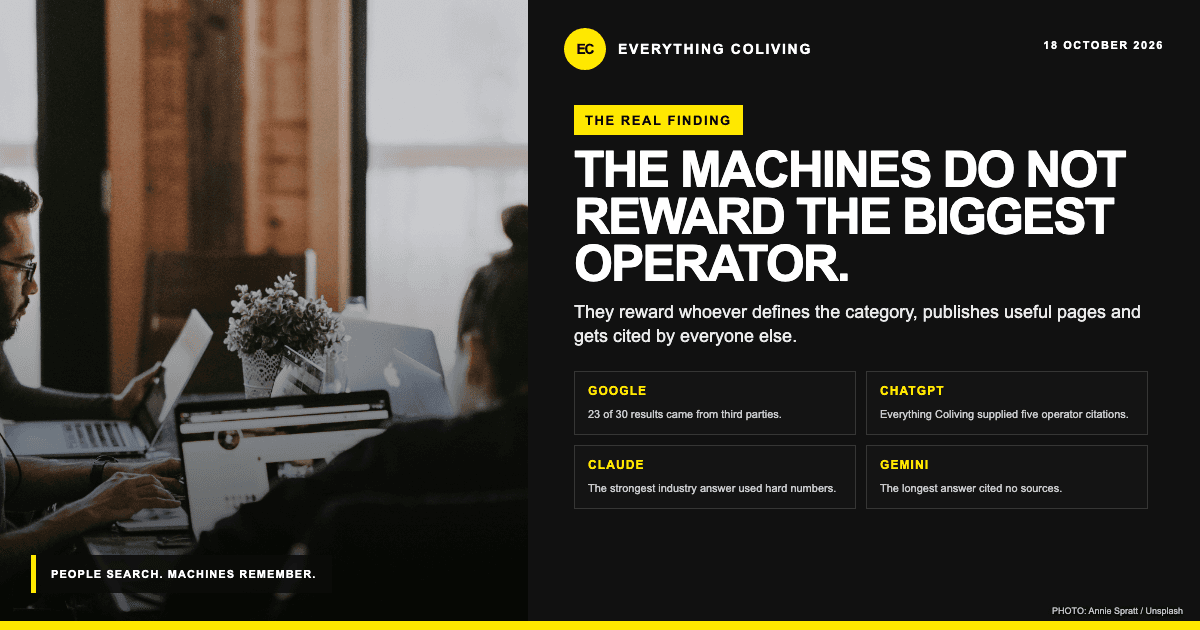
I Googled 'best coliving companies in the world'. Then I asked the AIs (Claude, Chatgpt, & Gemini)
I typed “best coliving companies in the world” into Google, ChatGPT, Claude and Gemini. 38 names came back. Only two showed up on all four, and neither is the biggest operator. Here’s what each platform rewards and how coliving operators can use it to get ranked and cited.

Canada's Office Vacancy Problem Is Coliving's Biggest Opportunity
Key Takeaways: - Canada's coliving market is at Day 1 and that's a massive opportunity for first-movers - Office-to-coliving conversion can deliver units in 9 months at lower cost than new builds - The 'room → street → neighbourhood' design philosophy is a best-practice framework for community at scale - Pre-leasing with anchor employers is a smart de-risking strategy for investors - Affordability, loneliness, and climate are three problems co-living addresses simultaneously and that's a powerful policy and investor narrative